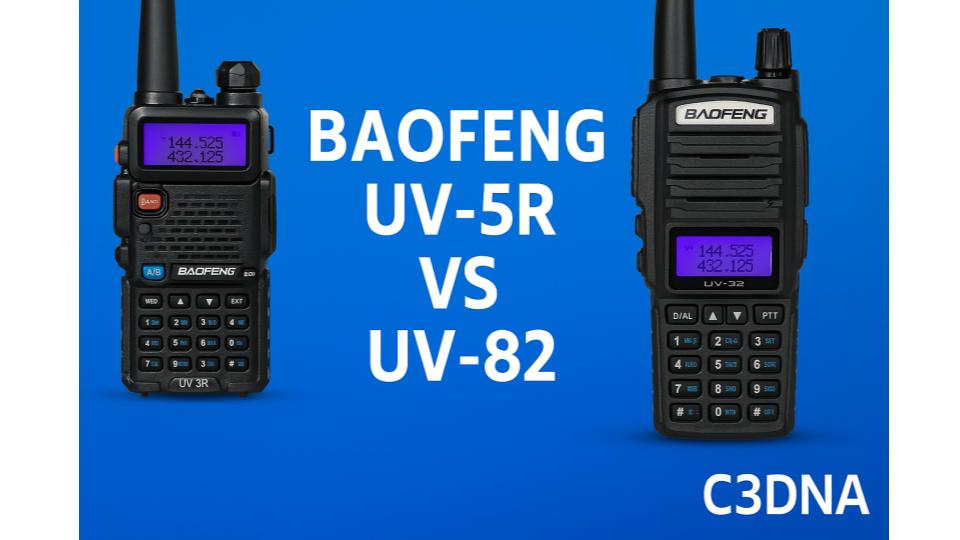
Baofeng has earned a reputation for building budget-friendly, feature-packed handheld radios that appeal to hobbyists, emergency communicators, and professionals alike. The UV-5R remains a legendary dual-band radio known for its affordability and flexibility, while the UV-82 refines that formula with better audio, a more rugged case, and an improved dual push-to-talk (PTT) system.
🏷️ Baofeng Radio Deals ⭐⭐⭐⭐
If you’re deciding between the two, here’s a detailed comparison to help you choose the right one for your needs.
🔍 Overview
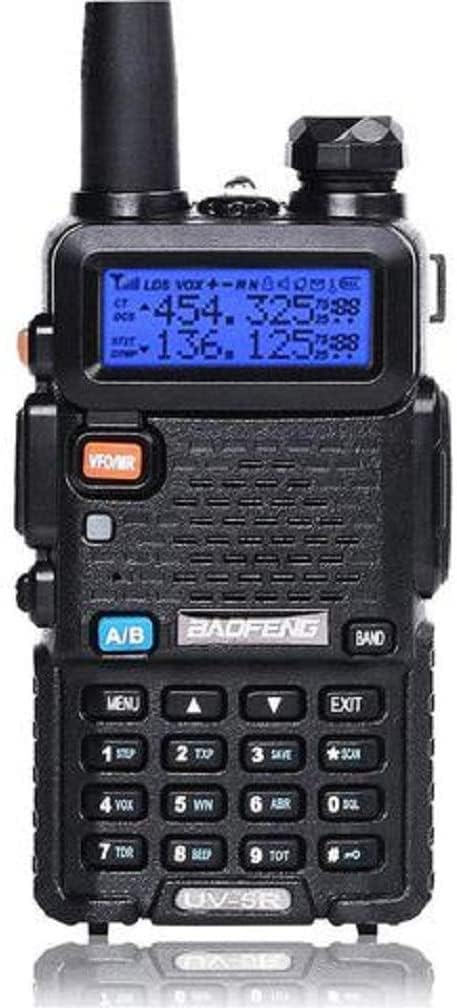
The Baofeng UV-5R is one of the most popular handheld transceivers ever made. Covering VHF 136-174 MHz and UHF 400-520 MHz, it offers true dual-band performance in a compact, lightweight form. It’s ideal for amateur radio operators, preppers, hikers, and anyone needing affordable communication with wide accessory support.
🛒 Check the latest UV-5R price on Amazon
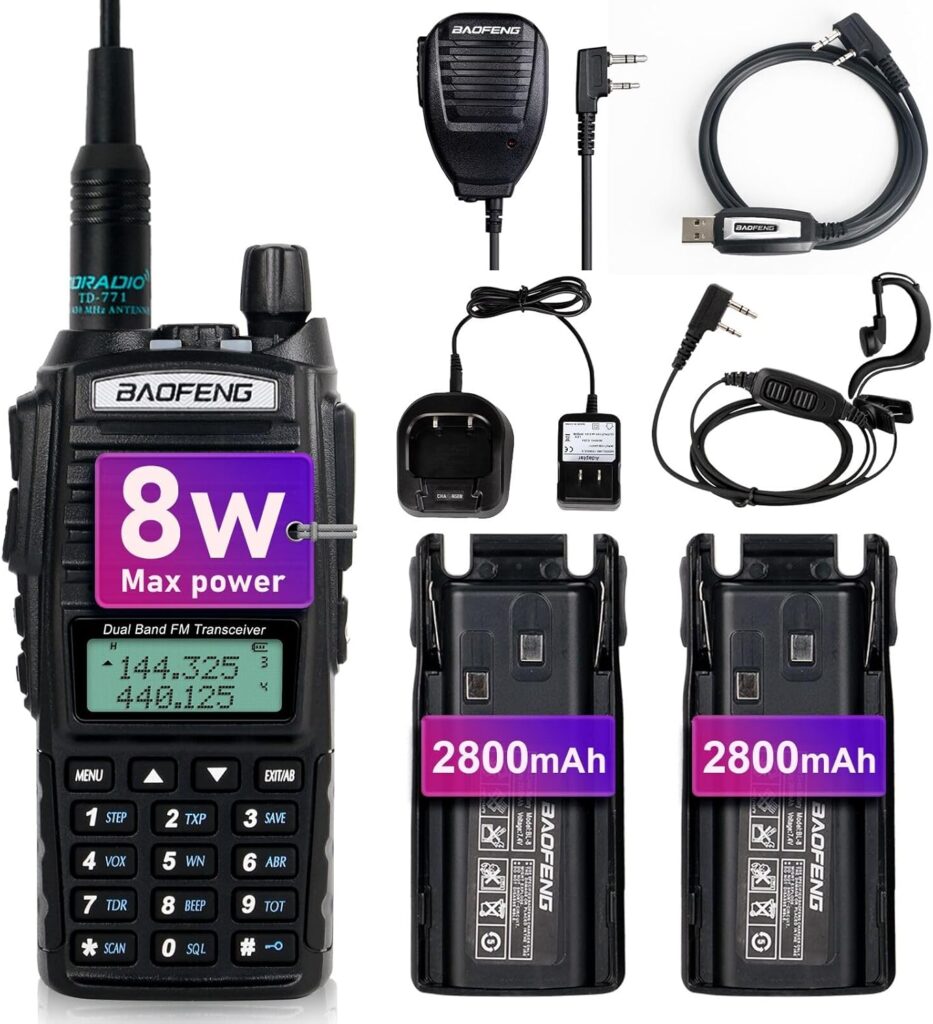
The Baofeng UV-82 builds on that same platform but adds refinements aimed at serious users. It features a stronger case, louder speaker, and dual PTT button that allows quick switching between two channels without menu navigation. These upgrades make it better suited for field, security, and emergency operations.
🛒 Check the latest UV-82 price on Amazon
📊 Specification Comparison
| Feature | Baofeng UV-5R | Baofeng UV-82 |
|---|---|---|
| Frequency Range | 136-174 MHz / 400-520 MHz | 136-174 MHz / 400-520 MHz |
| Output Power | 1 W / 5 W | 1 W / 5 W |
| Channels | 128 | 128 |
| Audio Output | 700 mW | 1000 mW |
| Dual PTT Button | No | Yes |
| Antenna Connector | SMA-Female | SMA-Female |
| Battery Capacity | 1800 mAh Li-Ion | 2800 mAh Li-Ion |
| Display | Dual-band LCD | Dual-band LCD |
| Case Material | Plastic | Reinforced plastic |
| VOX Function | Yes | Yes |
| FM Radio (65-108 MHz) | Yes | Yes |
| Flashlight | Yes | Yes |
| Programming | CHIRP Compatible | CHIRP Compatible |
| Weight | ~210 g | ~250 g |
| 💳 Pricing – Check Price | 💲 Check Price UV-5R | 💲 Check Price UV-82 |
⚙️ Performance and Functionality
Both the UV-5R and UV-82 deliver solid performance in terms of range, audio clarity, and dual-band versatility. Under ideal conditions, users can expect up to 5-8 km (3-5 miles) of range handheld-to-handheld and significantly more with repeaters.
The UV-82 offers noticeable improvements in speaker loudness and build quality. Its larger form factor houses a 1-watt speaker, producing crisp, clear audio that’s ideal for noisy environments. Additionally, the dual PTT button allows seamless switching between A/B bands – perfect for team coordination or monitoring two frequencies at once.
In contrast, the UV-5R remains the lightweight, go-anywhere choice with excellent portability. Its smaller size and vast accessory ecosystem make it a favorite for beginners, radio clubs, and emergency kits.
🧰 Build and Design
The UV-5R is compact and designed for convenience. It fits easily into a pocket or gear pouch, with a simple keypad layout and a backlit LCD display.
The UV-82, however, feels more premium in hand. It’s slightly larger with thicker plastic, larger buttons, and a more ergonomic grip. The reinforced antenna base and improved battery latch enhance durability, making it better for outdoor or field operations.
Both models share compatibility across many Baofeng accessories such as batteries, speaker mics, and antennas, making them flexible for multi-radio setups.
💡 Ease of Use and Programming
Both radios are compatible with CHIRP software, allowing easy programming of channels, tones, and repeater settings. The UV-82’s dual PTT button can take a bit of getting used to, but it becomes second nature with regular use.
The UV-5R remains slightly simpler for absolute beginners, thanks to its smaller size and single PTT layout.
Community feedback often highlights the UV-82’s superior audio quality and more robust build, while the UV-5R earns praise for being easy to set up and modify.
🧩 Ideal Use Cases
| User Type | Recommended Model | Why |
|---|---|---|
| Beginners | UV-5R | Simple to learn, widely supported, affordable |
| Outdoor Enthusiasts | UV-82 | Stronger build and louder audio |
| Emergency / Preppers | UV-82 | Dual PTT and higher reliability |
| Radio Hobbyists | UV-5R | Huge online community and mod support |
| Security / Event Staff | UV-82 | Rugged design and quick dual-channel control |
🏁 Verdict
Both the Baofeng UV-5R and UV-82 deliver outstanding value for their price and remain some of the most capable budget handheld radios available.
Choose the UV-5R if you want a compact, affordable, and easy-to-use radio that’s perfect for beginners or backup kits.
👉 Buy the Baofeng UV-5R on Amazon
Choose the UV-82 if you need a tougher, more powerful option with better sound and a professional feel. Its dual PTT and improved build quality make it ideal for real-world applications where durability and clarity matter most.
👉 Buy the Baofeng UV-82 on Amazon
In short, the UV-5R is the classic entry-level choice, while the UV-82 is the evolution – refined, louder, and built for tougher conditions.
Frequently Asked Questions
What is the main difference between the UV-5R and UV-82?
The UV-5R is Baofeng’s classic entry-level dual-band radio, widely used for its low cost and large support community. The UV-82 is a refined version with a larger body, bigger buttons, improved ergonomics, and louder audio. Some variants of the UV-82 also offer higher advertised transmit power.
Does the UV-82 have better audio quality than the UV-5R?
Yes. The UV-82 has a larger speaker and improved audio cavity, resulting in louder, clearer, and fuller sound. The UV-5R performs well for everyday use, but its speaker output is generally thinner.
Are both radios compatible with the same accessories and batteries?
Yes. The UV-5R and UV-82 share the same accessory ecosystem, including batteries, chargers, antennas, speaker mics, and programming cables. This makes switching between the two models easy.
Which radio has stronger transmit power or range?
Some UV-82 versions advertise higher power ratings than the UV-5R, but real-world differences in range are usually small. Terrain, antenna choice, and line-of-sight conditions make a bigger impact than the radio model itself.
Which model is better for beginners?
The UV-5R is generally recommended for beginners because of its simplicity, affordability, and the huge number of online guides and tutorials available. The UV-82 is still beginner-friendly, but documentation for it is not as abundant.
Does the UV-82 offer better build quality than the UV-5R?
Yes. The UV-82 typically feels more rugged. It has a wider chassis, larger buttons, a more solid grip, and a sturdier overall build. The UV-5R is lighter and more compact but feels less robust in comparison.
Are programming and menu systems similar between the two?
Yes. Both radios share nearly identical menu structures and firmware behavior. They can be programmed using the same software, including CHIRP, and work similarly for repeaters, tones, and memory channels.
Is the UV-82 worth the extra cost compared to the UV-5R?
If you value louder audio, improved ergonomics, and a slightly tougher build, the UV-82 is worth the extra cost. If price and community support matter most, the UV-5R remains the better value.
Can the UV-5R and UV-82 communicate with each other?
Yes. As long as both radios are set to the same frequency, bandwidth, and tone settings, communication is seamless. Both models operate on standard VHF and UHF amateur bands.
Which model is better for emergency or preparedness use?
Both radios work well, but the UV-82’s louder audio, larger buttons, and sturdier build may offer advantages during stressful or outdoor situations. The UV-5R is still reliable and widely used for emergency kits due to its low cost and accessory availability.
Does the UV-82 have any trade-offs compared to the UV-5R?
The UV-82 is larger, slightly heavier, and costs more. Its wider body may not fit as easily into small pockets compared to the UV-5R. Otherwise, both radios share the same core functionality.