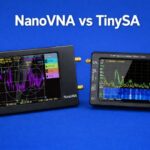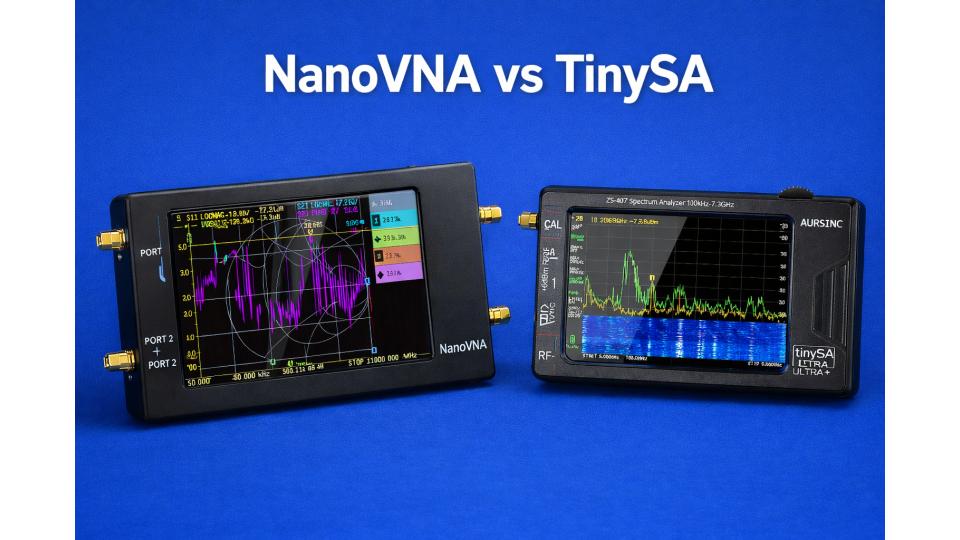
Both the NanoVNA and the TinySA fit in a shirt pocket, cost under $100, were developed by the same person (Hugen, also known as hugen79), and share a devoted following in the amateur radio and RF engineering community. They even look alike. But they are fundamentally different instruments designed to answer different questions, and buying the wrong one for your use case is a common and expensive mistake.
This article explains what each instrument does, where they overlap, how they differ, and which one belongs in your kit.
What Each Instrument Actually Does
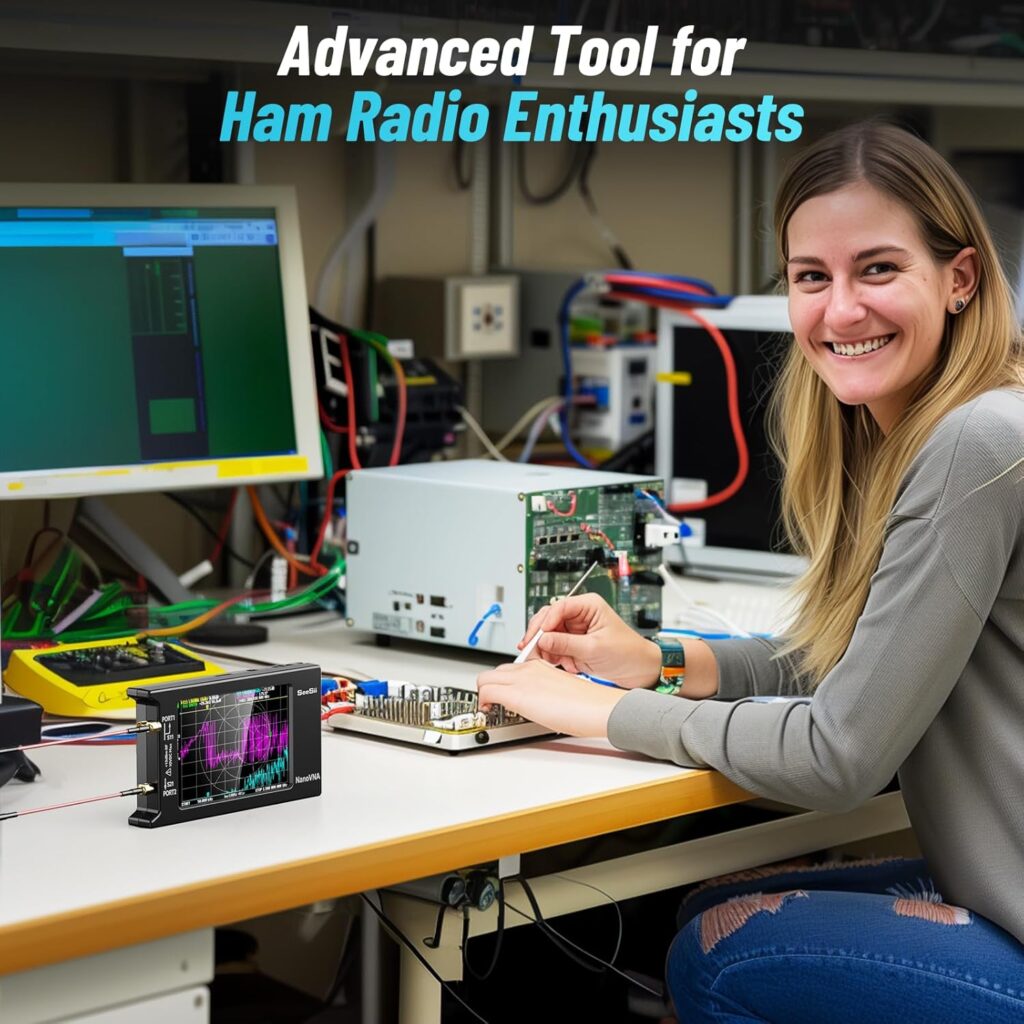
A Vector Network Analyser (VNA) measures how a signal behaves as it passes through or reflects off a device under test. It applies a known signal, measures what comes back at PORT1 (reflected, or S11) and what passes through to PORT2 (transmitted, or S21), and from those measurements computes S-parameters, impedance, SWR, insertion loss, return loss, phase, group delay, and Smith chart data. It characterises the device by measuring its response to a stimulus.
NanoVNA vs TinySA — Which Tool Do You Need?
These two instruments answer different RF questions. The NanoVNA measures how RF signals behave through components. The TinySA shows what signals already exist in the spectrum.
A Spectrum Analyzer measures what is already present in a frequency band. It sweeps across a range of frequencies and shows the amplitude of signals it finds there. It does not inject a stimulus. It listens. It tells you what signals exist, at what frequencies, and at what power levels.
These are complementary instruments, not interchangeable ones. If you want to tune an antenna and verify its resonant frequency and return loss, you need a VNA. If you want to verify that your transmitter’s harmonics are below the regulatory limit, or find out what signals are occupying a frequency band, you need a spectrum analyser.
The NanoVNA Family
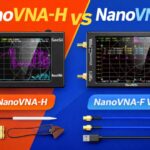
The NanoVNA was designed by edy555 and popularised by Hugen, whose NanoVNA-H hardware variant became the most widely distributed version. The H-series uses a Si5351 clock generator as the signal source, with SA612 mixers and audio codec digitisation. The architecture is a clever low-cost implementation of a homodyne receiver that extends to 1.5 GHz using odd harmonics of the Si5351’s output.
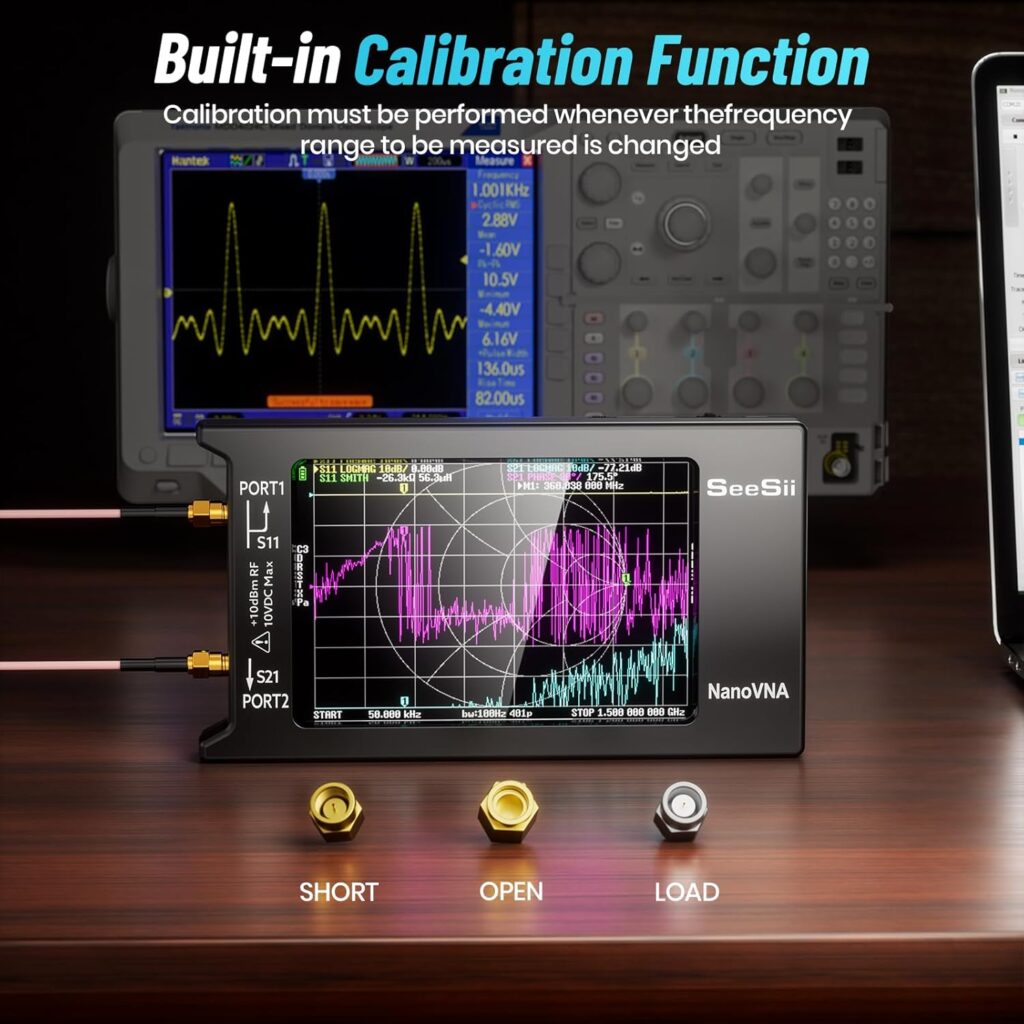
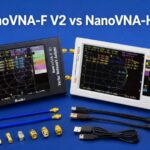
The NanoVNA-H4 is currently the most common variant for new buyers, featuring a 4-inch display and a 1,950 mAh battery. The NanoVNA-F V2, developed by BH5HNU and sold through Chelegance, uses an ADF4350 fractional-N PLL to reach 3 GHz without relying on harmonics, which is a meaningfully different and more capable RF architecture.
What the NanoVNA measures: S11 (reflection/SWR), S21 (transmission/insertion loss), impedance, Smith chart, phase, group delay, and cable TDR analysis. It is a two-port instrument requiring connection to both the device under test and the reference path.
What it cannot do: show you what signals are in the air, measure the power of a transmitter’s output, identify interference sources, or check harmonic suppression of a transmitter under operating conditions. For any of these, you need a spectrum analyser.
NanoVNA
A vector network analyser designed to measure how RF signals interact with components. Ideal for tuning antennas, measuring filters, checking impedance, and analysing RF circuits.
- Measures S11, S21, SWR, impedance
- Smith chart visualisation
- Great for antenna tuning
- Useful for filter and amplifier testing
The TinySA Family
The TinySA also originated from Hugen’s hardware development work, using a different architecture built around a heterodyne swept receiver. The original TinySA covers 100 kHz to 960 MHz across two inputs: a higher-quality low-frequency input (100 kHz to 350 MHz) and a lesser-quality UHF input (240 MHz to 960 MHz). It also functions as a signal generator, outputting sine waves to 350 MHz and square waves to 960 MHz.
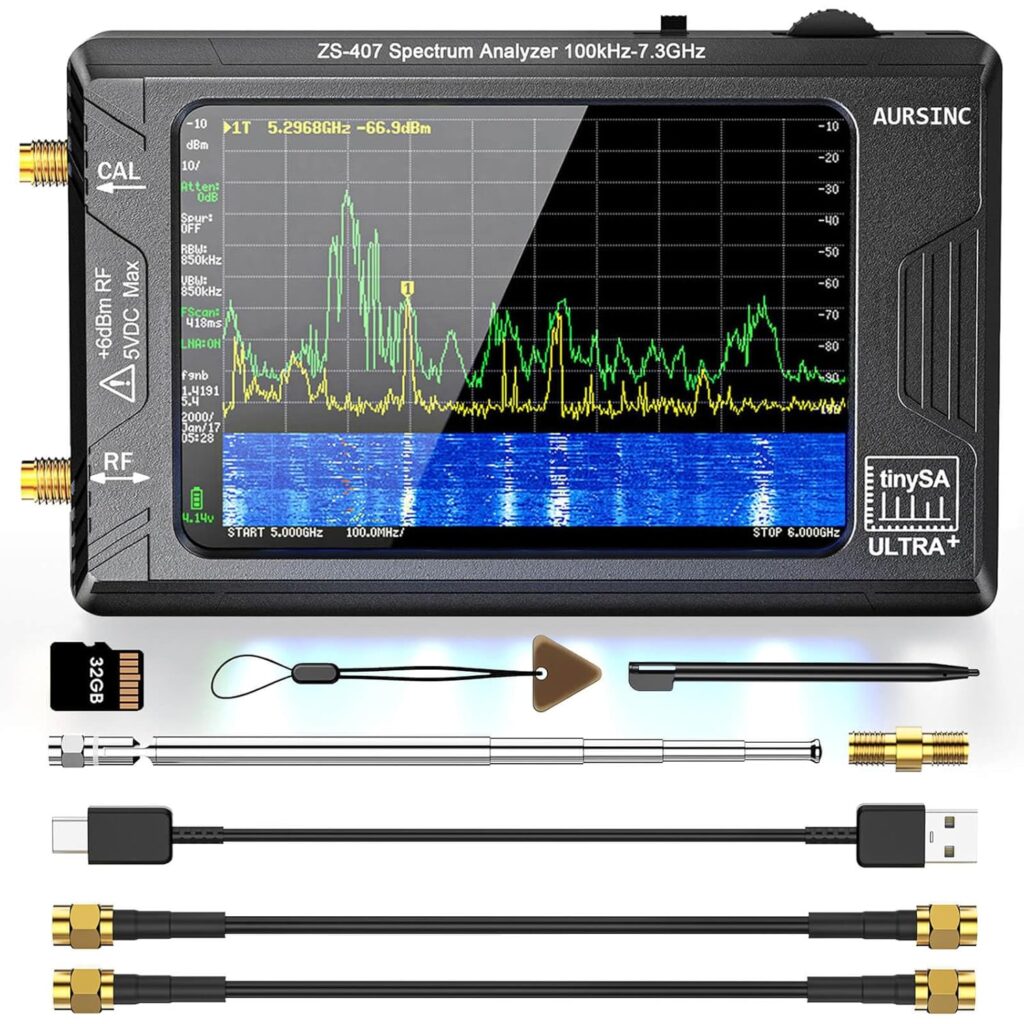
The TinySA Ultra is the current mainstream variant, extending coverage to 5.3 GHz in standard mode and up to 6 GHz in Ultra mode, with a 4-inch display, 450 scan points, adjustable resolution bandwidth from 200 Hz to 850 kHz, and a 3,000 mAh battery. The TinySA Ultra+ pushes further, with variants reaching 7.3 GHz.
What the TinySA measures: signal presence and amplitude across a frequency range, power levels, spurious emissions, harmonic content of transmitters, noise floors, and interference sources. It is a single-port instrument. You connect one thing to it, or point an antenna at something, and observe.
What it cannot do: measure S21, characterise filter response by stimulating the filter with a known signal, or produce a Smith chart. It has no PORT2. It is not a VNA and cannot substitute for one.
TinySA Spectrum Analyzer
A compact spectrum analyser designed to observe RF signals in the air. Ideal for finding interference, checking transmitter harmonics, and analysing signal power across frequencies.
- Measures signal power vs frequency
- Find interference and noise sources
- Check transmitter harmonics
- Built-in signal generator
Where They Overlap and Where That Creates Confusion
Both instruments can estimate antenna resonance. The NanoVNA does this definitively by measuring S11, as it knows exactly how much power is reflected at each frequency. The TinySA can do it approximately by connecting the antenna and using the TinySA as a noise source with an attenuator, then looking for the frequency where the signal dips, but this is a workaround technique, not a primary measurement function.
Both instruments can check whether a signal is present on a frequency. The NanoVNA does this only accidentally, as it has no receiver for ambient signals. The TinySA does this as its primary purpose.
Both can function as signal generators, which makes them useful for injecting test signals into a chain for other instruments to measure.
The confusion arises because both look similar, cost similarly, and are often discussed in the same forums and YouTube videos. New buyers frequently ask “should I get a NanoVNA or a TinySA?” as though these are competing products. They are not. A better question is “do I need to characterise devices, or do I need to observe the spectrum?” The answer usually points clearly to one or the other.
Quick Comparison
| NanoVNA-H4 | NanoVNA-F V2 | TinySA (original) | TinySA Ultra | |
|---|---|---|---|---|
| Type | Vector Network Analyzer | Vector Network Analyzer | Spectrum Analyzer | Spectrum Analyzer |
| Frequency range | 50 kHz – 1.5 GHz | 50 kHz – 3 GHz | 100 kHz – 960 MHz | 100 kHz – 5.3 GHz |
| Ports | 2 (PORT1, PORT2) | 2 (PORT1, PORT2) | 2 inputs (low/high) | 2 inputs (low/high) |
| Measures S-parameters | Yes | Yes | No | No |
| Measures Smith chart | Yes | Yes | No | No |
| Measures ambient signals | No | No | Yes | Yes |
| Measures harmonic suppression | Partially (S21 only) | Partially (S21 only) | Yes (primary function) | Yes (primary function) |
| Signal generator | Yes (limited) | Yes (limited) | Yes (100 kHz–960 MHz) | Yes (100 kHz–800 MHz sine, 4.4 GHz square) |
| Display | 4.0″ TFT | 4.3″ IPS | 2.8″ colour | 4.0″ colour |
| Battery | 1,950 mAh | 5,000 mAh | ~650 mAh | 3,000 mAh |
| Approx. price | $50–70 | $90–120 | $60–80 | $100–130 |
Which One Should You Buy?
Buy the NanoVNA if: you design, build, or tune RF filters, antennas, or amplifiers and need to measure their frequency response. You regularly check SWR or return loss. You want Smith chart visualisation for impedance matching. You work with coaxial cables and want TDR fault location. In short: if your question is “what does this component do to RF signals?”, the NanoVNA answers it.
Buy the TinySA if: you want to see what is happening in the spectrum. You need to verify that your transmitter’s spurious emissions and harmonics meet regulatory requirements. You want to identify interference sources. You need to check whether a frequency is clear before transmitting. You work with receivers and want to find what is desensitising them. In short: if your question is “what RF signals exist here and how strong are they?”, the TinySA answers it.
Buy both if: you do serious RF work. They are genuinely complementary. The NanoVNA characterises your filters before installation; the TinySA verifies your transmitter’s performance and compliance after. Total cost for both is well under $200, and together they cover a measurement capability that would cost thousands of dollars in conventional bench equipment. Most active RF experimenters who start with one end up owning both within a year.
The Practical Bottom Line
The NanoVNA and TinySA are the two best value-for-money RF test instruments available to the amateur radio and hobbyist market. Neither is a substitute for the other. The NanoVNA tells you what a component does; the TinySA tells you what the spectrum looks like. Both were developed from the same open-source hardware lineage, both run active firmware communities, and both punch well above their price points for the measurements they are designed to make. Understand what question you are trying to answer, and the right instrument choice becomes obvious.
Best RF Tools Under $100
Choose the NanoVNA if you need to characterise antennas, filters, or RF circuits. Choose the TinySA if you want to see what signals exist in the spectrum and how strong they are.
Get NanoVNA Get TinySA