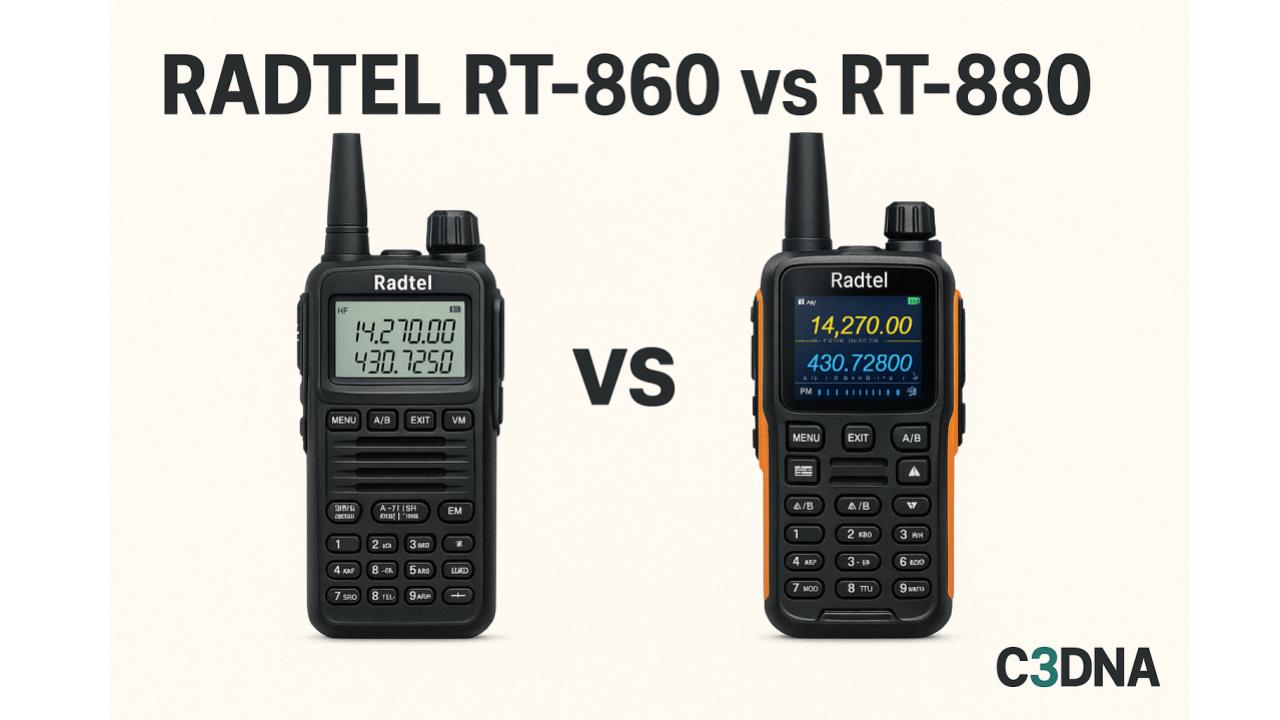
Radtel’s RT‑860 and RT‑880 are powerful options for amateur and CB radio users, offering wide frequency coverage and a host of handy features. While they share a lot in common, key differences like display, receive performance, and additional capabilities make each suited to different use cases.
🏷️ RADTEL Radio Deals ⭐⭐⭐⭐
Product Overview
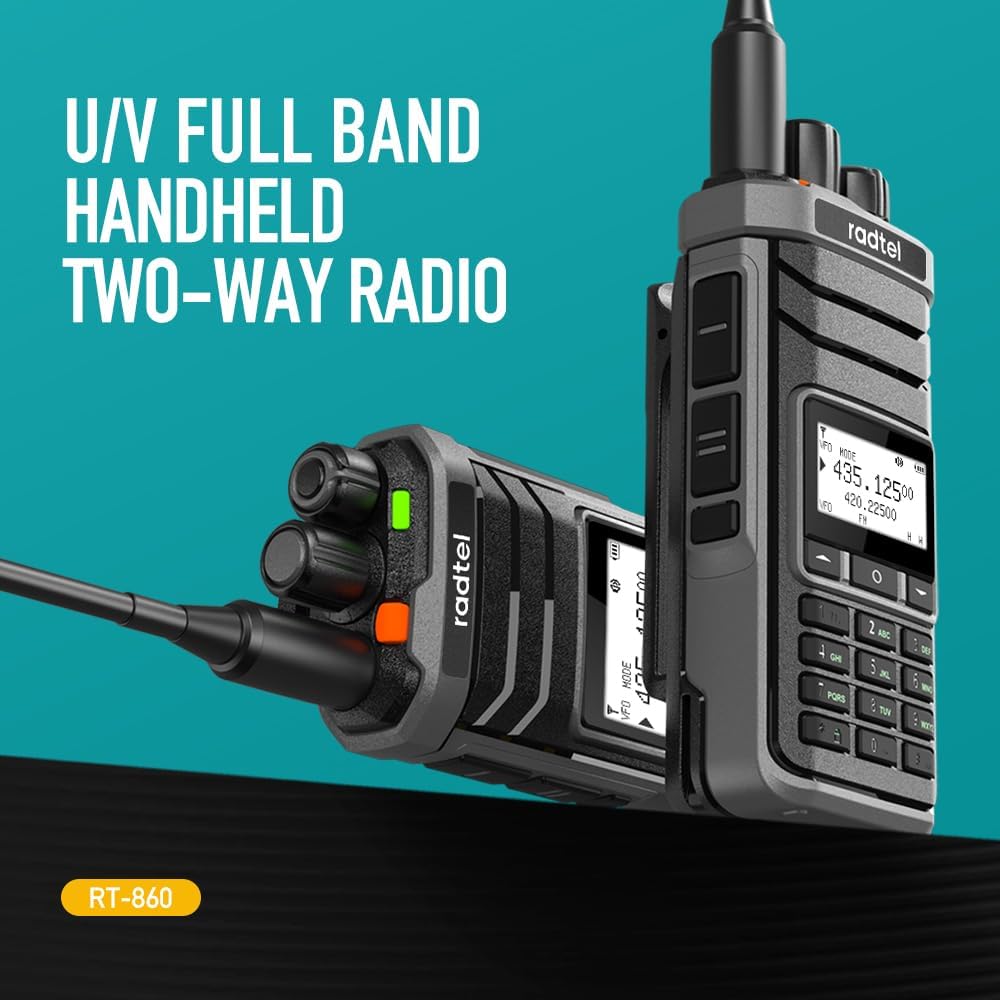
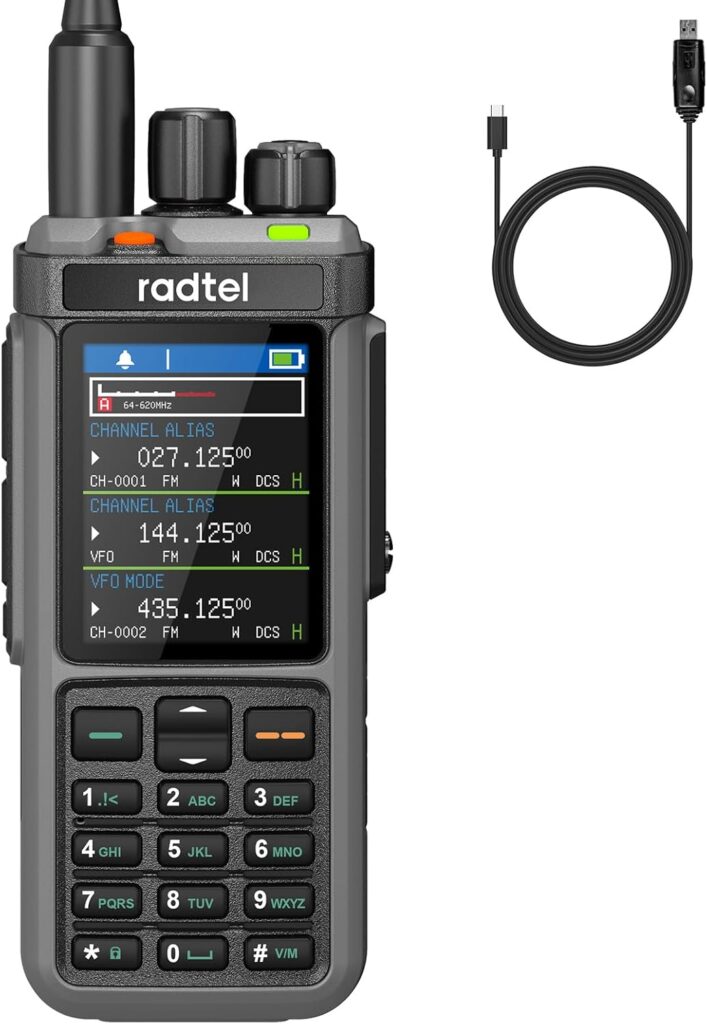
Radtel RT-860
- Covers HF/VHF/UHF, with capability for AM, USB, LSB, CW, CB, LW, MW, SW, and SSB reception.
- Built-in air-band receiver and NOAA weather channels.
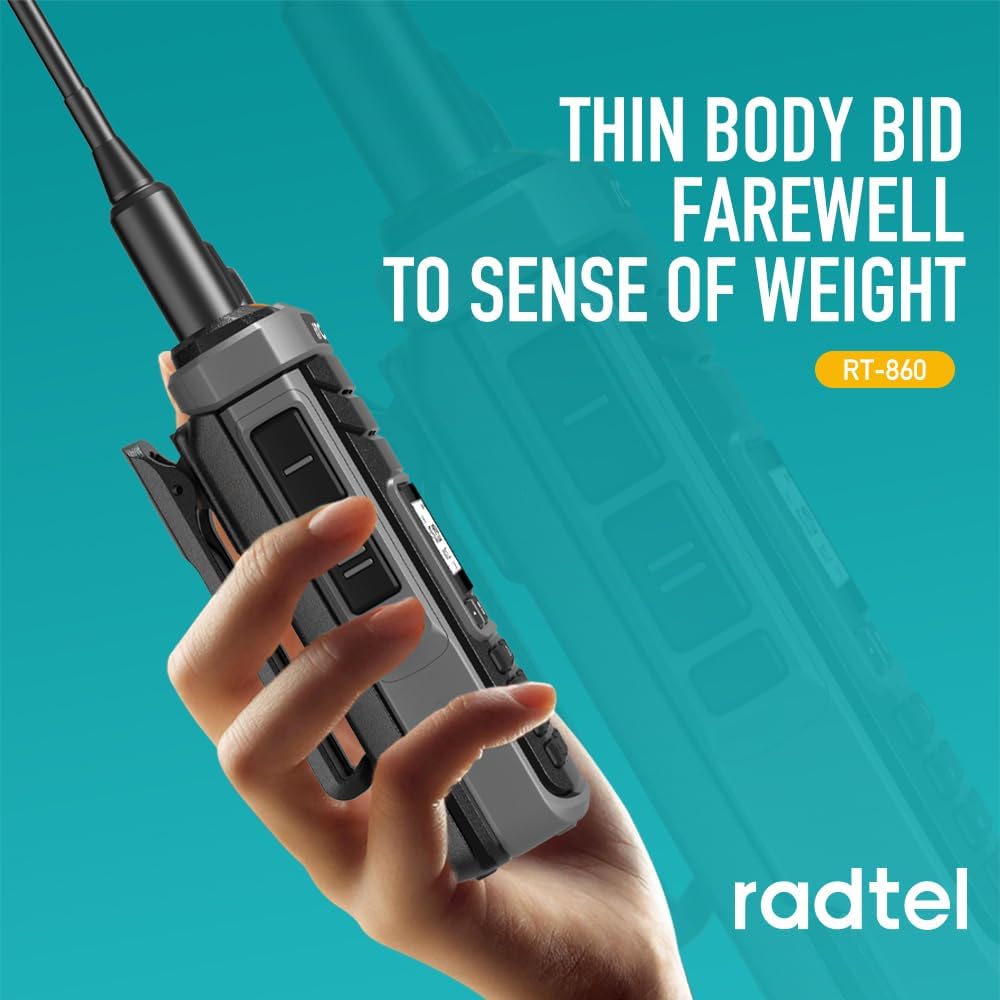
- Compact design with Type‑C charging and a robust, metal-bodied build.
Radtel RT-880
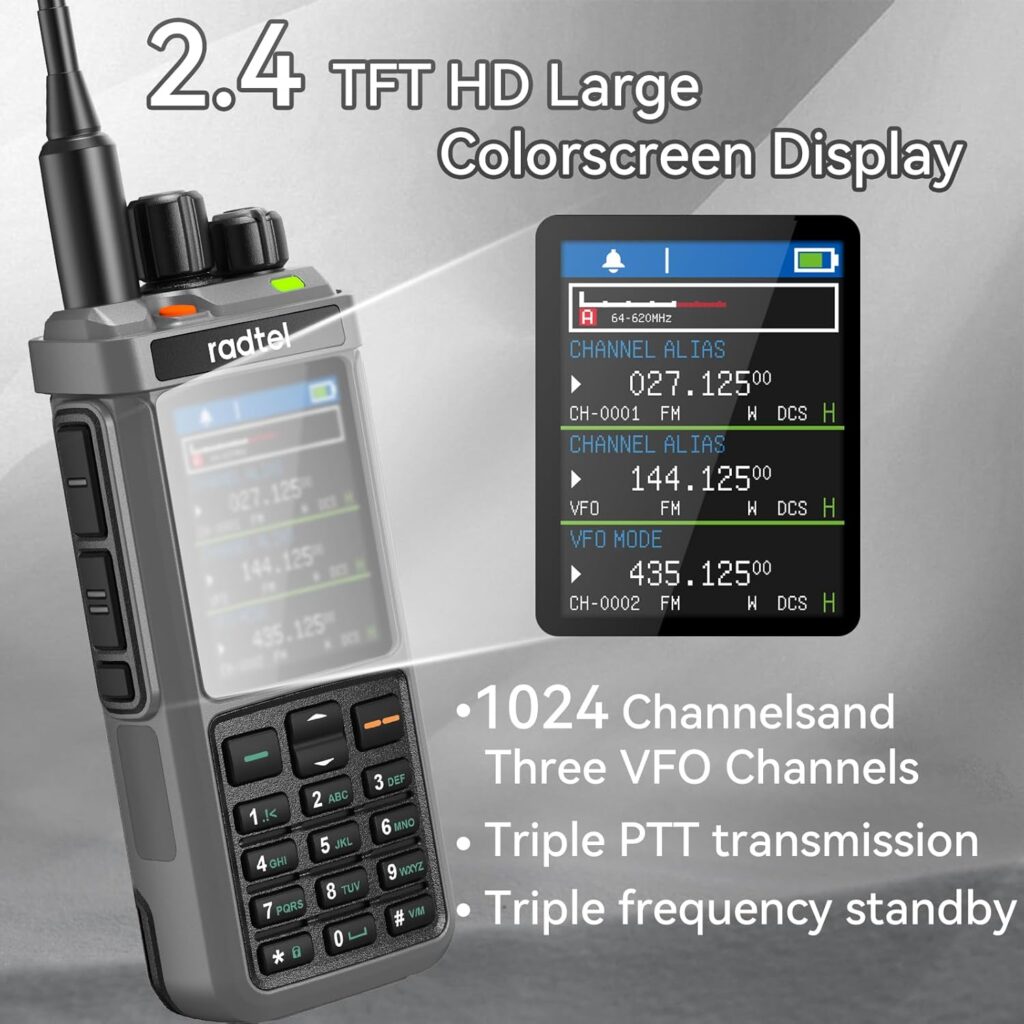
- Also supports extensive multi-band reception, plus exclusive extras like cross-band relay/repeater, 2.4-inch color display, and real-time field strength meter.
- Larger 2400 mAh battery and interface enhancements.
Comparison Table
| Feature | Radtel RT-860 | Radtel RT-880 |
|---|---|---|
| Frequency Coverage | HF/VHF/UHF, AM/USB/LSB/CW/CB/LW/MW/SW/SSB | Similar wide coverage + cross-band functionality |
| Display | Standard monochrome LCD | Larger 2.4″ color display, clearer UI |
| Cross-Band Relay | No | Yes — repeat signals across bands |
| Real-Time Signal Meter | No | Yes — shows field strength numerically |
| Battery Capacity | ~2000 mAh | 2400 mAh — longer runtime |
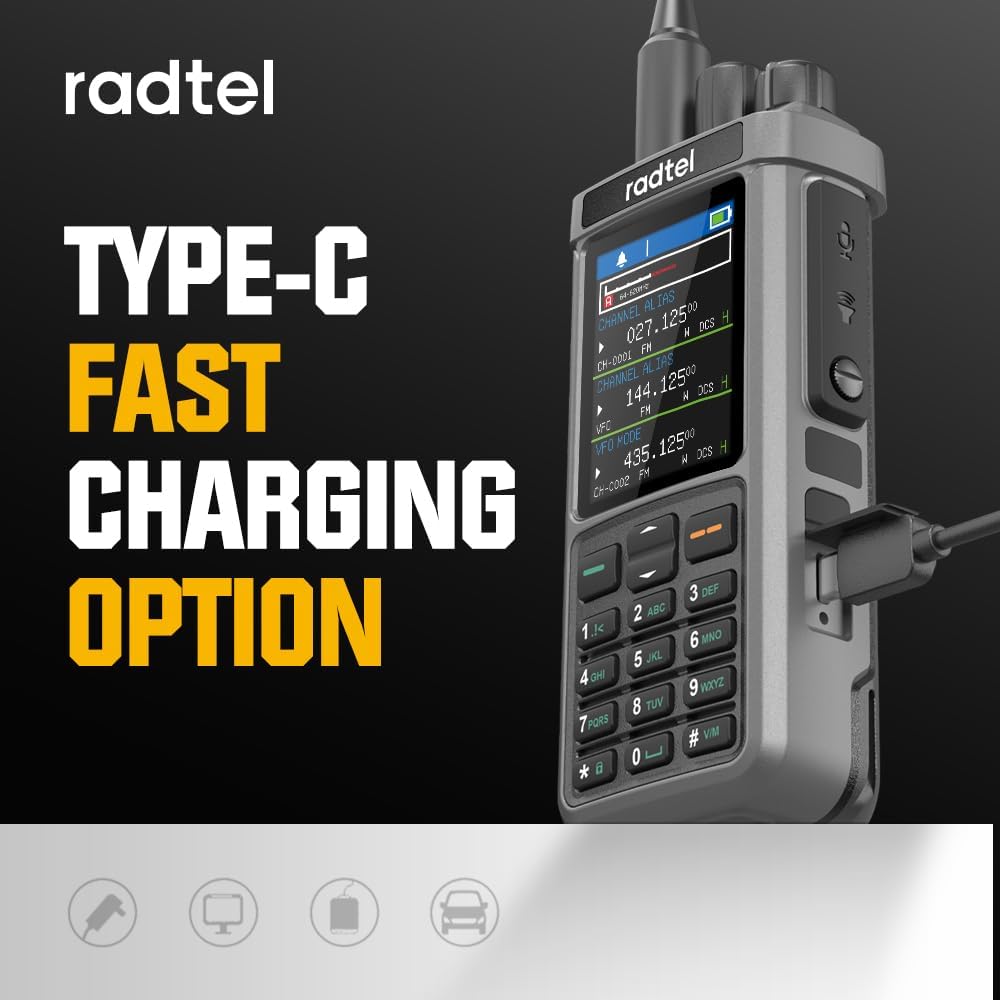
| Charging Port | Type-C | Type‑C — fast charging |
| Antenna Compatibility | Only stock antenna guaranteed | Same caution applies — stock recommended |
| Build & Durability | Tough metal body | Similar rugged build |
| Price & Community Adoption | More widely known and supported | Newer model with advanced features but less online presence |
| HF Reception Enhancement | Good HF receive | Improved HF receive over RT‑860 — users report stronger audio and sensitivity |
| 💳 Pricing | 💲Check Price | 💲Check Price |
Pros & Cons
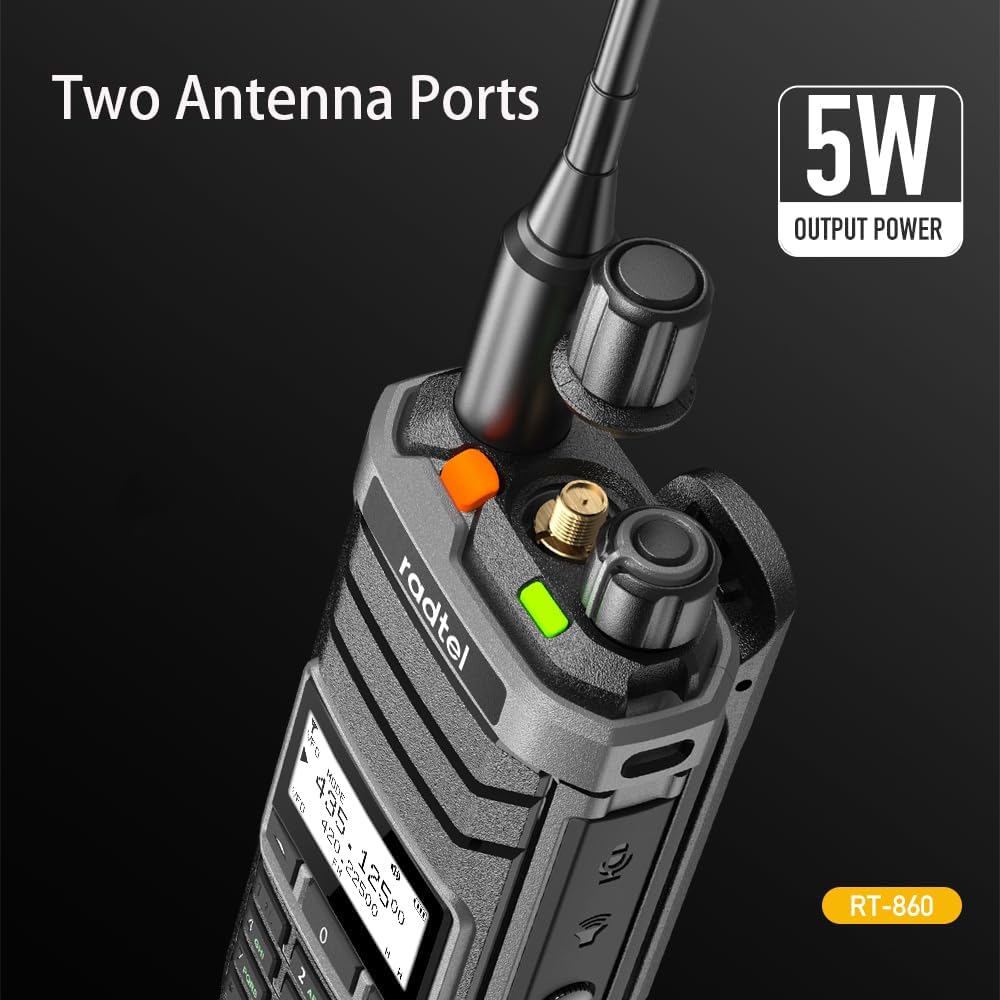
Radtel RT-860
Pros:
- Broad band coverage (including AM/FM/SW/air band)
- Compact, durable design with Type‑C charging
- Established community and accessory support
Cons:
- Basic monochrome display
- No cross-band or real-time signal metering
- Only stock antenna reliably works
Radtel RT-880
Pros:
- Bright color display for easier navigation
- Cross-band relay/repeater capability
- Real-time field strength feedback
- Larger battery, longer use time
- Improved HF receive performance reported by users
Cons:
- Slightly higher price
- Newer with smaller user base
- Same antenna compatibility limitations
Final Thoughts
- Choose the RT-860 if you prefer a proven, rugged radio with comprehensive band versatility and solid community support.
- Opt for the RT-880 if you want enhanced usability, cross-band features, and visual display upgrades that make operating more intuitive and flexible.
Frequently Asked Questions
What are the main functional differences between the RT-860 and RT-880?
The Radtel RT-860 is a compact, budget-friendly dual-band handheld designed for everyday VHF/UHF communication. The RT-880 is a higher-end model offering improved RF performance, a richer feature set, a more advanced display, and stronger audio output. The RT-880 is generally considered the “premium” version with more refined hardware and firmware.
Does the RT-880 offer a better display and user interface than the RT-860?
Yes. The RT-880 typically includes a larger, clearer, higher-contrast screen. Its menu layout is cleaner, making it easier to navigate settings and channels. The RT-860 uses a simpler LCD that is functional but harder to read in bright sunlight or low-light conditions.
Is the receive sensitivity improved in the RT-880 compared to the RT-860?
Yes. The RT-880 has a more refined RF front end with better filtering and sensitivity. This results in clearer audio, better weak-signal reception, and reduced background noise. For urban monitoring or fringe-area communication, the RT-880 performs noticeably better.
Does the RT-880 support additional features such as cross-band relay or enhanced repeater functions?
Depending on the version, the RT-880 may offer expanded repeater control options, improved tone settings, and more reliable dual-watch operation. The RT-860 is simpler and more limited in advanced features. The RT-880 is better suited for intermediate to advanced users who rely on repeater networks.
Are battery capacity and runtime better on the RT-880?
The RT-880 often comes with a higher-capacity battery pack compared to the RT-860. Combined with efficient power management, the RT-880 typically runs longer on a single charge. The RT-860’s battery life is adequate for casual use but shorter under heavy transmit conditions.
Do both models cover the same frequency ranges?
Both radios typically support VHF and UHF amateur bands, but the RT-880 may support additional receive coverage such as FM broadcast, expanded UHF segments, or wider scanning ranges depending on firmware. The RT-860 covers the essentials but is more limited in wideband reception.
Are antennas, accessories, and programming software shared between the two radios?
Yes. Both radios commonly use the same antenna connector type, battery format, charging base, and programming cable. They also use similar software interfaces, and CHIRP compatibility is typically available for both depending on the specific firmware build.
Which model is better for beginners?
The RT-860 is ideal for beginners because it is simple, affordable, and easy to learn. The menus are basic, and you can get it up and running quickly. The RT-880 is better for users who want more features and are comfortable navigating more advanced controls.
Which model is better for advanced users or field operation?
The RT-880 is better suited for experienced users thanks to its improved RF performance, clearer display, and expanded feature set. It handles repeater operation, signal monitoring, and long-range outdoor use better than the RT-860.
Is the RT-880 worth the extra cost over the RT-860?
Yes, if you need better performance, clearer audio, stronger receive sensitivity, and a better user interface. The RT-860 remains a great entry-level value, but the RT-880 offers meaningful upgrades for only a moderate increase in price.
How does build quality compare between the RT-860 and RT-880?
The RT-880 generally feels more robust, with tighter construction, smoother buttons, and a sturdier housing. The RT-860 is lightweight and functional but lacks the more premium fit and finish of the RT-880.
Do the RT-860 and RT-880 communicate with each other?
Yes. As long as both radios are programmed to the same frequency, bandwidth, and tone settings, they will communicate seamlessly. They are fully compatible for basic VHF/UHF use.
Does either model have better community support or documentation?
The RT-880 tends to receive more attention from enthusiasts due to its expanded feature set. More tutorials, reviews, and user guides are available. The RT-860 has adequate support but a smaller knowledge base because it is more basic.
Which model is better for emergency or off-grid use?
The RT-880 is typically the better option thanks to its improved battery life, more durable build, clearer display, and stronger receiver. The RT-860 still works well for backup or family communication but lacks the enhanced robustness of the RT-880.
Does the RT-880 introduce any trade-offs compared to the RT-860?
The main trade-offs are cost and complexity. The RT-880 is more expensive and has a steeper learning curve. The RT-860 is cheaper, simpler, and more beginner-friendly, though with fewer advanced features.